Winery email marketing
Email is where a winery makes its money. Everyone on your list has already bought from you, visited you or asked to hear from you, and every sale it brings comes straight to you. I plan, write and send strategic emails to all of those customers: new releases, offers, event invitations and offers based on what each person bought before.
“I want my email list to sell more of my wine.”
- For
- Wineries selling direct
- Where
- UK, France and USA
- First step
- A free 20-minute call
What's included
- A yearly email plan built around your releases, your events and the gifting season
- New release and allocation campaigns to your whole list, with early access for your best customers
- Offers and event invitations aimed at the customers most likely to say yes
- Past-purchase emails: the new vintage of a wine someone loved, and a reorder prompt when their last case should be running low
- Automated welcome, basket recovery and lapsed-customer emails
- Wine club emails if you run a club: sign-up, shipment previews and renewals
- Monthly reporting on revenue per email and the share of your direct sales that came from the list
How I work
I write in the winery's voice, from notes you give me on each wine. You approve every campaign before it goes out.
Market rules
Sign-up forms confirm legal drinking age and clear consent. In the UK and France you can email existing customers about similar products, as long as they could opt out when they bought and can opt out from every email. In the US, every email carries your postal address and an unsubscribe link. French emails follow the Loi Évin, which keeps the message on the wine itself.
Why email earns the most
The people on your list already know your wine. Reaching them again costs a fraction of finding someone new through ads, and each order arrives at your full direct price.
That is why I treat email as the main sales channel for a winery rather than a newsletter. A good list sells a release in days and fills a tasting weekend. It also brings a one-time buyer back for a second case, and the second order is where a customer starts to become valuable.
I set out a full sending year in winery email marketing: what to send and when.
What gets sent, and who gets it
Sending everything to everyone wears a list out. Each email goes to the people it suits, using what your shop already knows about them.
| Who gets it | What it does | |
|---|---|---|
| New release | The whole list, with past buyers of that wine first | Sells the vintage at full price while it’s new |
| Offers | Customers matched to the offer, such as mixed-case buyers for a mixed case | Moves stock and brings quiet customers back |
| Events | Customers within reach of your door, and past visitors | Fills tastings, dinners, open days and tours |
| Past-purchase offers | Anyone who bought a wine or grape before | Puts the next vintage or a similar wine in front of them |
| Reorder prompts | Customers whose last case should be running low | Earns the repeat order before they buy elsewhere |
| Gifting | Last year’s gift buyers and corporate orders | Secures Christmas orders early |
| Win-back | Customers quiet for 9 to 12 months | Restarts the conversation with a new vintage or a thank-you |
| Wine club | Members and likely members | Previews shipments, confirms renewals and invites your best buyers in |
Where your wine club fits
If you run a club, it sits inside this plan with its own track of emails. New members get a welcome series, each shipment gets a preview a week before the charge, and anyone who pauses gets a personal offer.
Your whole list then feeds the club. People who have ordered twice or come to a tasting are the ones most likely to join, so they get the invitation at the moment it makes sense. I plan the wine club release calendar for Jeff Runquist Wines this way.
How the sending year looks
Email for a winery follows the vintage.
The fixed points come from you: when a wine is released, when allocations go out, when the tasting room is full and when you want it fuller. In the UK, the Budget gives you another: the week after it is a good moment for an offer ahead of a duty rise. Those are the sends that earn money, and planning them months ahead keeps the writing unhurried.
Around them sit the automated emails, which run while you’re in the vineyard: the welcome series, basket recovery, the reorder prompt and the win-back. They get written once, then improved on what they actually earn.
Two to four campaigns a month suits most wineries, and a month with a release should look different from a month without one.
What I need from you
Notes on each wine, in whatever form is easiest. A voice memo from the cellar works well.
Your release and events calendar, as far ahead as you know it. Access to your email platform and your shop, so every campaign is tied to real orders.
And your approval before each send. I write in your voice from your notes, and you know whether the 2023 is ready to be talked about that way yet.
Who this suits
Wineries with a customer list, or with the visitors and web traffic to build one.
A few hundred subscribers and direct sales are enough to make this pay quickly, because a sale to someone who already bought from you is the cheapest one you will make. If your list is still small, I’ll start by growing it through your site, your tasting room and your orders.
It suits wineries that want email measured on sales. Revenue per send is the score, so I’ll tell you when a send is worth making and when your list deserves a rest.
How you will know it is working
Revenue per email, repeat orders, and how much of your direct sales came from the list, in plain English every month.
Opens and clicks are in the report, and they help when judging a subject line. Sales decide the score: a campaign with a modest open rate that sold forty cases beats a popular one that sold six.
I plan the release calendar for Jeff Runquist Wines so emails and releases move together, one of the pieces behind 245% growth in online wine sales.
Read the case study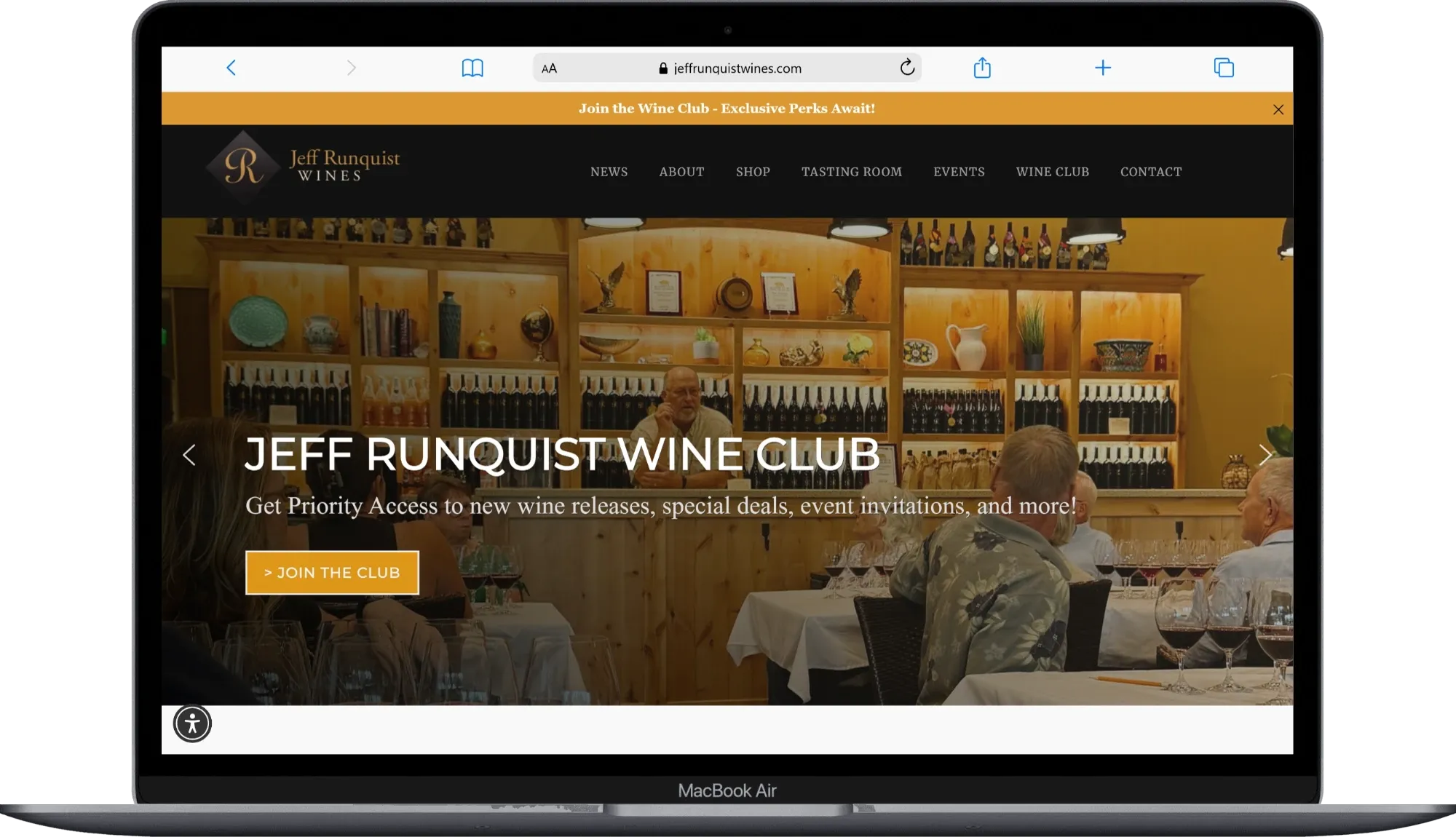
Further reading
- Winery email marketing: what to send and when A year-round winery email plan: the automated emails every winery needs, a month-by-month campaign calendar, and how to measure what sells.
- Winery marketing ideas that sell more bottles direct Twelve winery marketing ideas that turn one visit or order into repeat direct sales: email capture, release calendars, club tiers, gifting and more.
- UK wine duty explained: the rates, duty per bottle, and what it means for your prices How UK wine duty works since the 2023 reform, the rates from 1 February 2026, duty per 75cl bottle by ABV, and how to price and announce a rise.
Questions
- What is winery email marketing?
- Winery email marketing means sending planned, targeted emails to everyone who has bought from you, visited you or joined your list, so they keep ordering direct. It covers new releases, offers, event invitations, past-purchase offers, automated emails and wine club emails.
- What emails should a winery send?
- A new release email for every wine, a handful of well-timed offers, invitations to your events, emails based on what each customer bought before, and automated welcome and win-back emails. If you run a wine club, members get their own previews and renewal emails on top.
- Is this for wineries with a wine club?
- It suits every winery selling direct. Your whole customer list is where most of the sales sit, so that's where I start. A wine club gets its own emails inside the same plan, and if you're thinking of starting one, your list is the first place to fill it.
- How often should we send?
- Two to four campaigns a month suits most wineries, with more around releases and in the run-up to Christmas. Automated emails run on top of that, whenever a customer signs up, orders or goes quiet.
- Which email platform do you use?
- I work mostly in Klaviyo and connect it to your shop, so every campaign is tied to real orders and every customer's purchase history can shape what they receive.
- How do you grow and keep a wine club?
- Put the sign-up where interest peaks: on wine pages, in the basket, after a tasting and in the welcome email. Then keep members with a preview a week before each charge, member-only releases, an easy way to swap wines and a personal offer for anyone who pauses.
- Can you take over our existing email programme?
- Yes. I start by reviewing what you send now and what it earns, keep what works, and rebuild the automated emails first, because they earn every day without anyone pressing send.
Talk to me about your email list

A free 20-minute call with me about where your sales could grow, in English or French.