Winery SEO and wine tourism search
People search for tastings, tours and wines to buy long before they visit. I make sure your winery is the answer they find, on Google, on Maps and in AI search tools.
“I want visitors to find my cellar door first.”
- For
- Wineries selling direct
- Where
- UK, France and USA
- First step
- A free 20-minute call
What's included
- Google Business Profile set up and managed for your tasting room
- Pages for each wine, experience and event, written to answer real searches
- Local search work so you appear for wineries and tastings near your visitors
- Visibility in AI answers from tools like ChatGPT, Gemini and Copilot
- Monthly reporting on searches, bookings and shop visits from search
What winery SEO covers
Winery SEO makes sure the people searching for your wines, your tasting room and your experiences find you first, then land on a page that makes the next step easy. The work covers four things:
- Your Google Business Profile, which often appears before your website for any search with a place in it, such as “vineyard tours Sussex” or “wine tasting near Sonoma”
- A page for every wine and every experience, each written to answer what buyers and visitors actually search for
- A shop Google can see, with your wines ranking under your own domain rather than inside a frame or on a platform’s subdomain
- Mentions from the sites visitors trust, such as your wine route, regional tourism board, local press and competition listings
For English vineyards, the cellar door and wine tourism searches usually move first. I explain the method in more depth in SEO for wineries.
How the work runs
Search work for a winery splits in two, and they move at different speeds.
The first part is your Google Business Profile and everything around the tasting room. Someone a mile away searching for a tasting this afternoon is making a same-day decision, and what decides it is whether your hours are right, whether the photos look like somewhere worth driving to, and whether the questions people actually ask have answers on the profile. This part moves quickly, often within weeks.
The second part is your pages. A winery usually has one page for the wines and one for visiting, when it needs a page for each wine, each experience and each event. That is where the searches are, and it is slower work: writing takes time, and Google takes three to six months to settle a new page into position.
I do both at once, because the quick part funds the patience the slow part needs.
What I need from you
Less than you would think, and only the parts I cannot get right on my own.
Facts about your wines and your estate: what is in the blend, what changed this vintage, what a visitor actually does when they arrive. I write every page, then you check it. You know whether the Cabernet Franc sees oak. I do not, and guessing is how a winery ends up with pages that read as though nobody who makes the wine has seen them.
Access to your Google Business Profile and your analytics, if you have them. If you do not, I set them up.
Beyond that, a reply when I send something to check. Work stalls on approvals far more often than it stalls on search engines.
Who this suits
Wineries that sell direct and have somewhere for visitors to come. If most of your wine moves through a distributor and you have no cellar door, your marketing money is better spent elsewhere, and I will say so rather than take the work.
It suits you best if you have more wines and experiences than you have pages, because that gap is where the quickest gains are.
How you will know it is working
A monthly report, in plain English, on the searches you appeared for, what people did next, and which pages brought bookings and shop visits. Not a dashboard you have to interpret. If a month was quiet I will tell you why, and what I am changing.
I wrote the wine and estate pages for Jeff Runquist Wines to rank in search, part of the rebuild that grew online wine sales by 245%.
Read the case study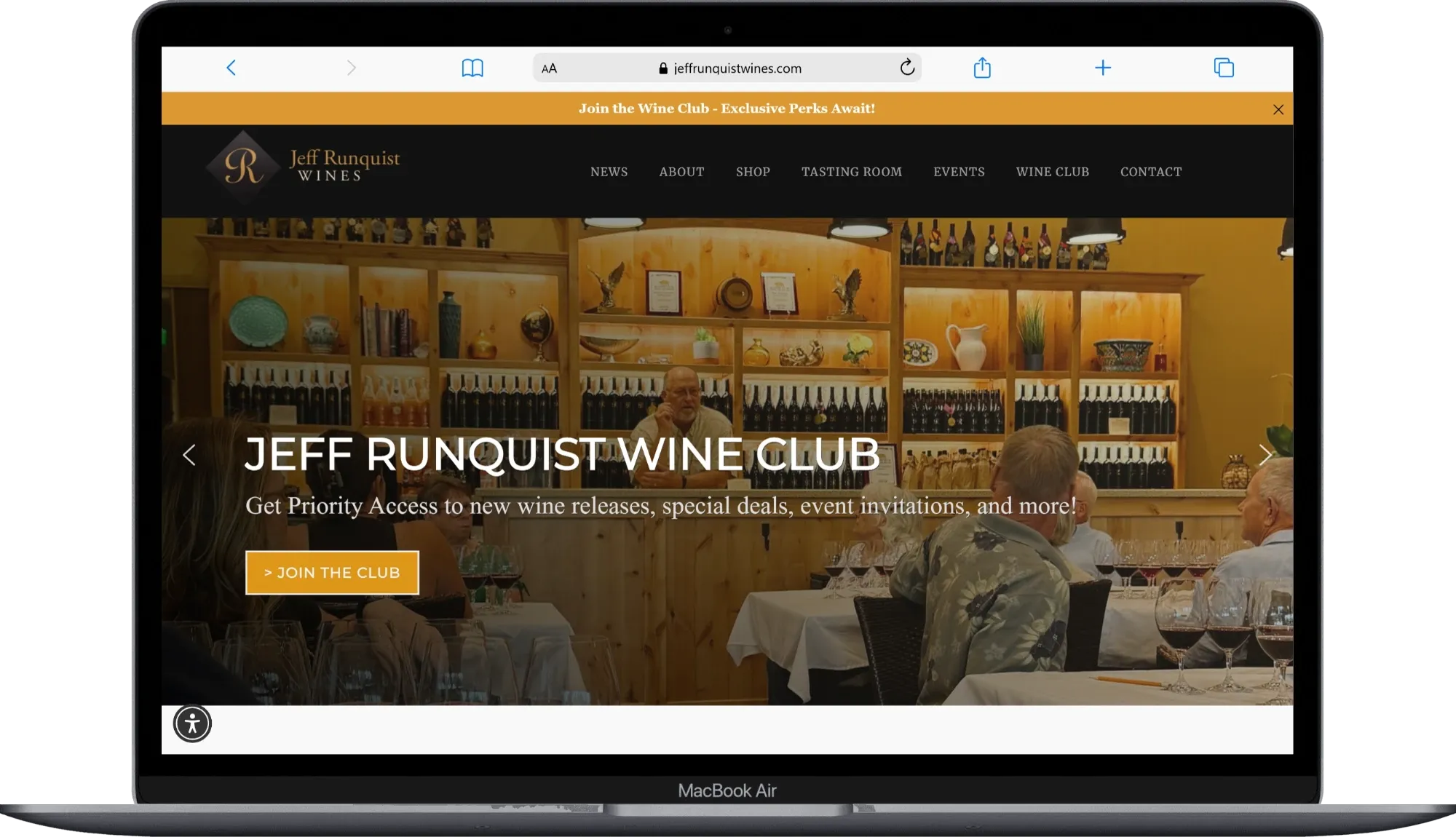
Further reading
- SEO for wineries: a practical guide to getting found and selling direct How wineries get found on Google, Maps and AI assistants: Google Business Profile, a page per wine and experience, mobile speed, and the links that matter.
- How wineries and wine suppliers get recommended by AI assistants How ChatGPT, Gemini and Copilot choose which wineries and suppliers to recommend, and the practical steps that make your business easy to recommend.
- How to sell wine online in the UK: licences, age checks, shipping and the shop What you need to sell wine online in the UK: a premises licence where orders ship from, a personal licence holder, age checks, AWRS and a shop that sells.
Questions
- How soon will we see results?
- Google Business Profile improvements often show within weeks. Page rankings usually build over three to six months.
- Do you write the content?
- Yes. I write every page, and you check the details on your wines and your estate.
- What is winery SEO?
- Winery SEO is the work that helps people searching for your wines, tastings and tours find your winery first on Google, Maps and AI assistants, and land on a page that makes booking or buying easy.
- Do you work with English vineyards?
- Yes. I'm based in Eastbourne, East Sussex, and work with wineries in the UK, France and the US. English vineyards often gain fastest from a complete Google Business Profile and a page for every tour and tasting.
- Is SEO or advertising better for a winery?
- They work best together. Ads bring visitors from the first week, and SEO builds visits that keep arriving without paying for each click. Most wineries start with their Google Business Profile and their own pages, then add ads around releases.
- Can you help us appear in ChatGPT and Gemini answers?
- Yes. AI assistants pull facts from your site, your Google profile and the regional sites they trust, so consistent details and clear answers on your pages are what get your winery recommended.
Let's talk about getting your winery found

A free 20-minute call with me about where your sales could grow, in English or French.