B2B email marketing for wine industry suppliers
B2B email keeps your business in front of wineries between orders. Winery buyers purchase a few times a year on a rhythm set by bottling and harvest, so the supplier in their inbox at the right moment gets the call. I plan, write and send the emails that put you there: reorder reminders, follow-ups on open quotes, product news and trade show campaigns.
“I want wineries to think of us first when it's time to order.”
- For
- Businesses selling to wineries
- Where
- UK, France and USA
- First step
- A free 20-minute call
What's included
- A yearly email plan built around bottling, harvest and the trade shows you attend
- Reorder reminders timed to each customer's buying history
- Follow-ups on quotes and samples that went quiet
- Product news, technical guides and customer stories written for winemakers and production managers
- Trade show invitations before the event and follow-up after it
- A clean, segmented list built from your customers, quotes and show contacts
- Monthly reporting on replies, quote requests and orders that came from email
How I work
I write from your product facts and from time with your sales team, so emails read like a knowledgeable rep rather than a brochure. You approve every campaign before it goes out.
Market rules
UK emails to companies carry your identity and an opt-out, and I treat sole traders and partnerships as individuals, which covers plenty of family vineyards. French emails relate to the recipient's job, say where their address came from and offer an easy way to object. US emails carry a postal address and an unsubscribe link under CAN-SPAM.
Why email is so strong in the wine trade
The wine trade is a small world with a long memory. Your market is a known list of wineries, and each one that buys tends to keep buying for years. A winemaker who says “not this year” in March may well say yes the following March, and the supplier they remember is the one who stayed useful in between.
Email is the cheapest way to do that at scale. It reaches the owner, the winemaker and the production manager directly, with the detail a technical buyer wants to read. One reorder won or one old quote revived can cover months of sending.
What gets sent, and who gets it
Each email goes to a defined group, using what your invoices, quotes and CRM already know.
| Who gets it | What it does | |
|---|---|---|
| Reorder reminder | Customers approaching the date they ordered last year | Wins the repeat order before a competitor quotes |
| Quote follow-up | Wineries with an open or lost quote | Reopens the conversation when the timing suits them |
| Sample follow-up | Anyone who requested samples | Turns a trial into an order |
| Product news | Buyers of related products | Introduces new lines to accounts that already trust you |
| Technical guides | Winemakers and production managers | Earns attention with useful answers to cellar questions |
| Customer stories | Prospects in the same region or size band | Shows a winery like theirs getting results |
| Trade shows | Customers and prospects in that region | Books meetings before the show and follows up after it |
| Win-back | Accounts quiet for a full buying cycle | Finds out what changed and restarts the relationship |
The sending year follows the cellar
Your buyers plan ahead, so the emails land before each decision.
Bottling season drives orders for bottles, closures, capsules, labels and cartons. Harvest drives everything from yeast and tanks to presses and picking crates, and most of those decisions get made months before the first grapes come in. The quiet weeks after harvest are when wineries review the year and set budgets, which makes them a good time for technical guides and customer stories.
Trade shows anchor the rest. The Vineyard & Winery Show in Kent, SITEVI in Montpellier, Vinitech-Sifel in Bordeaux and Unified in Sacramento each give you a reason to write before and after. Sell in both hemispheres and the calendar runs twice.
What I need from you
Your customer and quote records, in whatever state they’re in. Spreadsheets, invoices and show contacts are all fine, and I’ll tidy them.
Time with your sales team, because the questions they answer every week make the best emails. Your product facts, written down and correct.
And your approval before each send, so nothing reaches a customer in your name until you’re happy with it.
Who this suits
Suppliers with repeat products or long buying cycles, and a list of customers and past quotes to start from.
It pays fastest when your products get reordered every season, like closures, capsules, yeast, cartons and lab services. It also works well for big-ticket equipment, where a winery may spend years deciding and the supplier who stayed in touch gets the quote request.
If you’re still building your list, I’ll start with your website, your enquiry forms and your next trade show, so every new contact has somewhere to go.
How you will know it is working
Replies, quote requests and orders from email, reported in plain English every month, along with the accounts that came back after going quiet.
Opens and clicks are in the report, and a reply from a winemaker counts for far more than either. Each month you’ll also see which sends started real conversations, so your sales team knows who to call.
I run email marketing for Golden State Box Factory, a San Diego maker of wooden wine boxes since 1909, covering repeat buyers and new enquiries.
Read the case study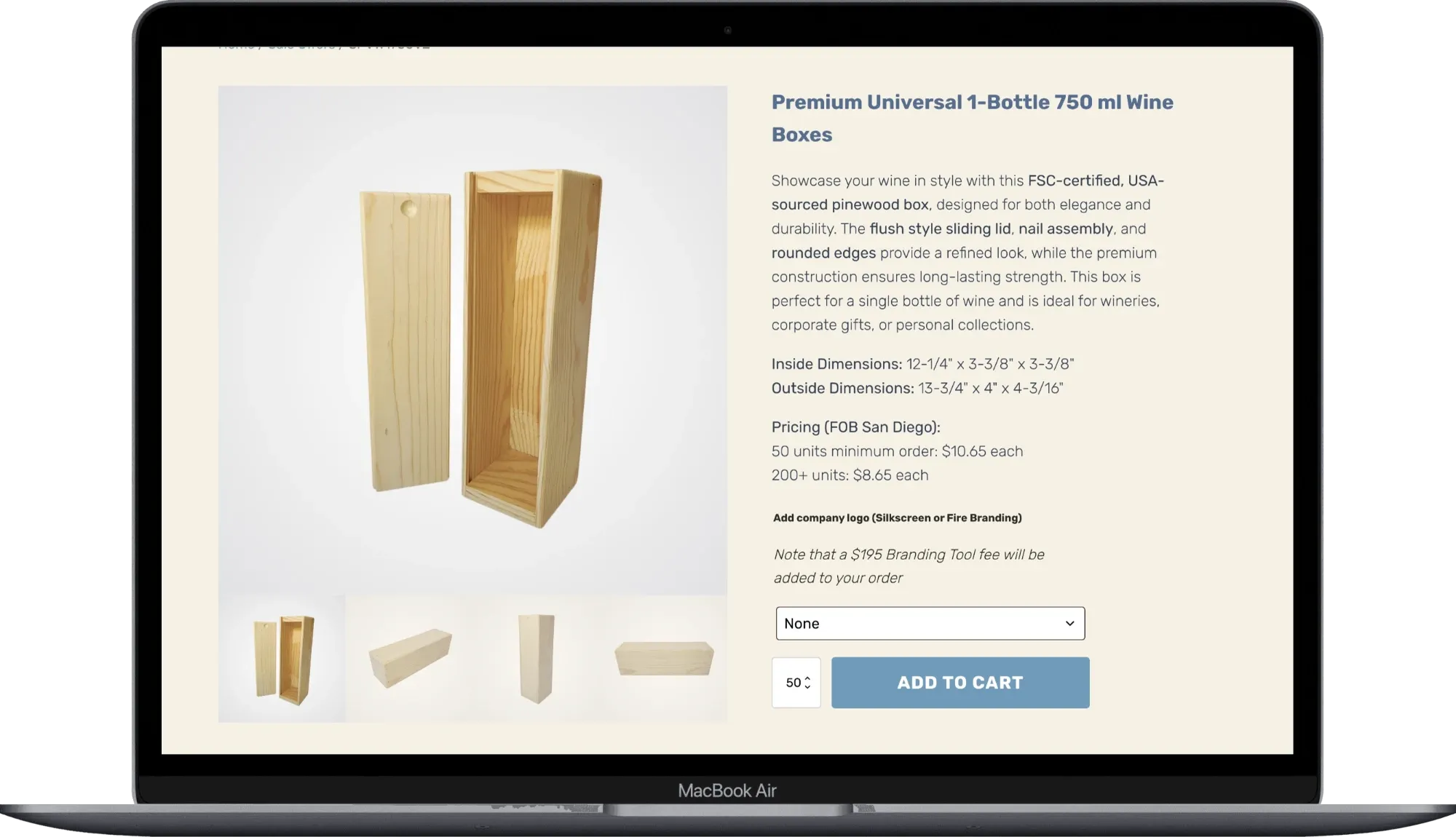
Further reading
- How wine industry suppliers win winery clients online B2B lead generation for wine industry suppliers: answer buyers' technical questions early, time campaigns to the wine year, follow up fast and show proof.
- AI sales assistants for wine industry suppliers: what they do and where they fit What an AI sales assistant does for a B2B supplier, how one works in practice, where it fits best, and how to set one up safely and measure the results.
Questions
- What is B2B email marketing?
- B2B email marketing means sending planned, targeted emails to the businesses that buy from you or might buy from you. For a wine industry supplier, that means reorder reminders, follow-ups on open quotes, product news and trade show campaigns aimed at the people who decide what a winery buys.
- Why does email work so well for selling to wineries?
- Your buyers are few, they buy on a seasonal rhythm and each account is worth a lot over the years. Email is the cheapest way to stay known to all of them, so you're the first name they think of when the bottling line needs a part or the next season's order comes round.
- How is this different from your lead follow-up service?
- Lead follow-up answers a new enquiry in the first few minutes. Email marketing covers everything after that: the months and years between a first conversation and each order. Many suppliers run both, with quiet enquiries passing from one to the other.
- Can we legally email wineries?
- Yes, with care. In the UK you can email companies at work addresses about relevant products if you say who you are and offer an opt-out, while sole traders and some partnerships count as individuals. In France, the CNIL allows it when the message relates to the person's job and they can object easily. In the US, CAN-SPAM requires an unsubscribe link and a postal address.
- Where does the list come from?
- From people who already know you: your customers, past quotes, sample requests, website enquiries and trade show contacts. Most suppliers hold more of these than they realise, spread across invoices, inboxes and business cards. I bring them together and clean them up first.
- How often should we send?
- Once or twice a month suits most suppliers, with extra sends ahead of bottling, harvest and the trade shows you attend. Reorder reminders run automatically on top, based on each customer's buying history.
- Can you write in English and French?
- Yes. I write both myself, so a supplier selling into the UK, France and the US can run one plan in two languages.
Talk to me about your customer list

A free 20-minute call with me about where your sales could grow, in English or French.